

Playful and Practical: Øst London, the Scandi Style Oasis in London's East End

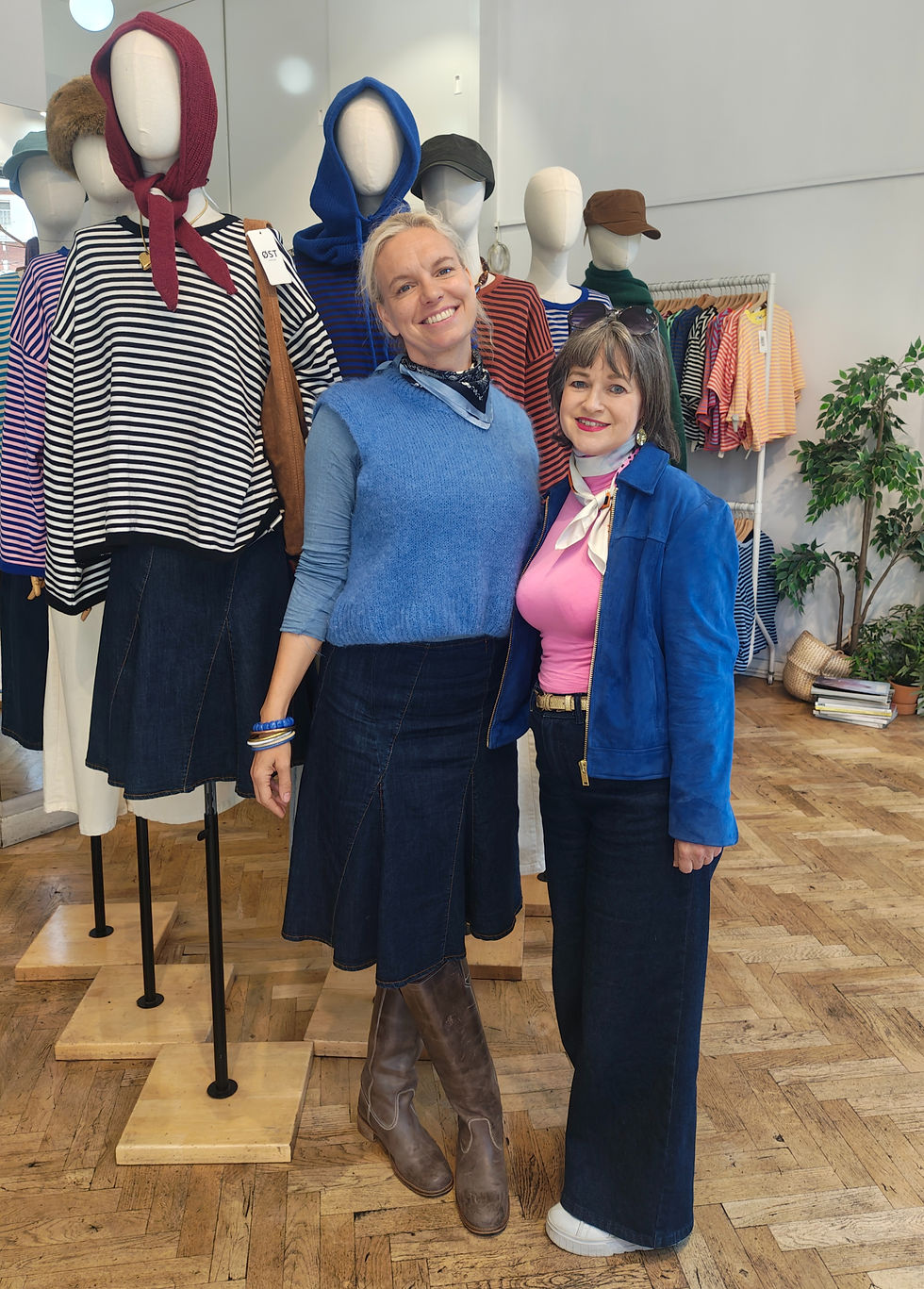
I had the real pleasure of interviewing Sigga Rude, founder of and designer at Øst London.

Sigga, please tell us a little about yourself.
I’m Sigga Rude, I was born in Copenhagen and grew up in the centre of Copenhagen, just outside Kongens have, the King's Gardens. When I was a child I went into all the shops in Copenhagen and knew exactly when they had new styles in. Walking around in shops was my hobby. Some of them I was really afraid to go into because I didn't feel I was smart enough but, did it anyway. And I've always played with Barbie dolls when I was little or paper dolls. But in my family you had to be an academic, so I studied human geography, but I never really liked it. I always felt like I wasn't good at it even though I got high grades and did well. And then all of a sudden I opened up a shop and played with clothes and it was so much more fun! I feel I'm good at it. So since I was 20, I've been working with fashion.
When we moved here, I started my own brand and made the clothes that I like and that I know that people like. It's very much focused on classics and I make the same styles again and again in new colours. I like to do something new and fresh, but every collection is not a big invention, it's just adding some new colours or changing some colours. But it is very colourful!
When people come in they often don't know what shop they're coming into or why they're coming in and then they will come in and be like it's Danish, my grandmother is Danish. They always have some kind of a story that connects them to this Danishness or to understand I had a jumper like that when I was a child or something like that. I think it's difficult when you're in it, but I can hear the reaction from people that we have something different and in general there's much more colour than other shops.
I like to do two colours together on a rail and then show how you can make an outfit. I love to pair the colours and it's fun to play around with.

How would you describe your own style, and also has it changed over time?
It has definitely changed over time. I've always dressed a bit differently from everybody or been more brave in the way I dress. Recently, there was a girl in my Copenhagen shop that I had been to primary school with and she told my staff, 'Of course I get her having a shop…she was always dressed so differently,’ and that was fun to hear!
I've been quite brave also with colouring my hair all colours and stuff like that.
When I was younger I liked retro style more…40s and 50s and 60s…and I still love retro, but I feel it doesn't look as good on me in the same way so I changed to a more classic, minimal style.
I think because I've been working in fashion for so many years you also get a bit tired of all these new trends constantly. I know what I like and I like to do the same styles that I know work. I do follow the trends, make the skirt longer or shorter, make a new colour…but I still make the same skirt or make the same jumper.
And you do all the designs yourself?
Most of it. We have one factory in Italy. It's smaller batches and it's a shorter delivery time, so that's where sustainability comes in. But still, it is fashion, and it is new styles, so I would say if you want proper sustainability, you shouldn't buy new at all. The whole sustainability talk is so big and so complicated, I don't know where to start, but I love that I can do something, making small batches, trying to not overproduce.
And I don't need to get rid of anything to get a new line in. Even though it's a summer colour and it's winter, I'll just keep it and then put it out again next summer. But I don't need to get rid of it just because I have new stuff coming in.
Could you say a little bit about what you think about either Danish style or Scandinavian style in general?
Danish style is more joyful or playful and not that formal.
Over here, we have school uniforms and the children are dressed quite formally. They look so cute, but in Denmark we don't have uniforms and in general it's more relaxed and less formal. I think that gives some opportunity to play around a bit more and express yourself a bit more. So it’s less polished, and because it's cold, we are good at layering up and it can be really cool, it looks fun and it looks joyful and I love that that part of the Danish fashion.
Obviously in the winter it's really cold, but houses flats are generally well insulated so you really do have that contrast between what you need to wear outside and inside.
Yeah, it's totally different ways of dressing.
But also there's a big difference between Swedes and Danes. Swedes I would say are much more stylish and well polished, while Danes are a bit more colourful. The Swedes have a certain standard; sometimes we Danes can be too relaxed and then we can be too lazy in how we dress or how we present ourselves. So it's finding that balance and the best of both worlds.

Are there any particular colours that you always like or does that change?
I love to play around with colours, but in my personal wardrobe, I have my colours: I have all shades of blue and then white and red. They’re my three colours.
I only have two or three pieces of black clothing so my clothes fit with each other. I like brown a lot in my boots and coats and they’re my other basics: brown and navy. And then of course I will play around with colours in a new season, but these are my staples and then I can add on a pop or a colour that’s popular.
Can you tell me about your experience of Copenhagen Fashion Week?
It's nice to know what's going on when you’re in the business. You can get overwhelmed with all the new colours and styles, but it's still good to have an awareness of what is coming and what is happening and what the other people are doing. I don't go home and write anything down, but I get an idea of what's happening.
I try to follow fashion, but I still want it classic, so it’s finding that balance. That's the main reason I go, and to see friends and family and I have lots of friends in the fashion industry.
How would you say Copenhagen is different from the other Fashion Weeks you go to?
More influences from all over the world come to Denmark but I think we are more playful in Denmark and have very much of a street style happening in Copenhagen. It's crazy, you can really see it and it's growing, it's becoming bigger and bigger. I think there was a small battle in Scandinavia of who was going to be the leader. It's been really lovely to see how big it's become and that Denmark is getting some respect for their style because it wasn't like that 15 years ago.
People don't show up to Fashion Week and throw something on, but still there’s that playfulness or joy in the way they are dressing. It's not too serious, and I like that part of it.
And you can see how you could translate what you see into everyday wear more.
It's Fashion Week in February, so you have to be practical. You need to put a hat on and you need to have some layers, when you're going in and out of shows.

And in Denmark, we bike everywhere. I think the practicality of fashion is a big difference. When I lived in Copenhagen, I was riding my bike everywhere and that's what I miss the most. It's just so lovely to go from A to B on your bike and see the city and be back again in minutes. You have to be practical when you spend so many hours on a bike. In London, you go in and out of the underground and you never get cold. It's more in your home when you sit still you can go cold, but not when you walk around in the city. But when I meet my friends, I'm always ready: I always have two or three jumpers in my bag. Being Danish, we know it can get cold very quickly, so you're just always prepared for weather. I think that's a very big difference in how we dress in the morning or think about dressing, because we just have to be much more aware of what the weather will be.

I like that you can see those influences. Finally, if you had a message for the fashion industry, what would it be?
Let people be joyful, and wear clothes that they can use for years. Classic doesn't have to be boring beige, but let people express themselves in some colour. But also make styles that last for longer and not just for a season.
Thank you so much for talking to me today, Sigga. It’s been wonderful.
You can visit Øst London near Old Spittalfield Market at 14-118 Commercial St, London E1 6NF or online at https://oestlondon.com/.
Facebook https://www.facebook.com/oestlondon/
For more content, sign up for my free weekly transformEd style magazine via the link below.
Why not take a look at my other blog posts?
Find me on my YouTube channel.


Comments