

Plastic-Free July and the Fashion Industry

Updated: Feb 15

What is Plastic-Free July?
Plastic Free July started in 2011 in Australia and has become an annual movement to discourage the use of single-use plastics. But what has this got to do with the fashion industry? Beyond improvising a poncho out of a bin bag at a festival or creating an emergency hat out of a carrier bag in a heavy July downpour, we're unlikely to wear single-use plastics.
Pack it in
If you buy clothes online, look into a brand's use of packaging. Websites should have information on the packaging used to send them out, for example whether they use recycled or recyclable materials for their parcels or natural, biodegradable materials. Use resources such as the Good on You app to see what brands are doing for the environment. More of this below!
Get baggy
Buying in person? Take your own bag. Many brands will now give out or sell re-usable fabric shopping totes. Or if you're handy with your needle, down-cycle old garments into unique carriers.
Sinful synthetics
Synthetic garments such as those made from polyester, nylon or elastane are basically made from plastic. Whatever your clothing is made of, however, make sure an item or outfit is never single-use (ie worn only once and sent to landfill), so aim to rewear or donate, sell, down- or up-cycle as part of what's called the circular approach.
Sounds Fishy!
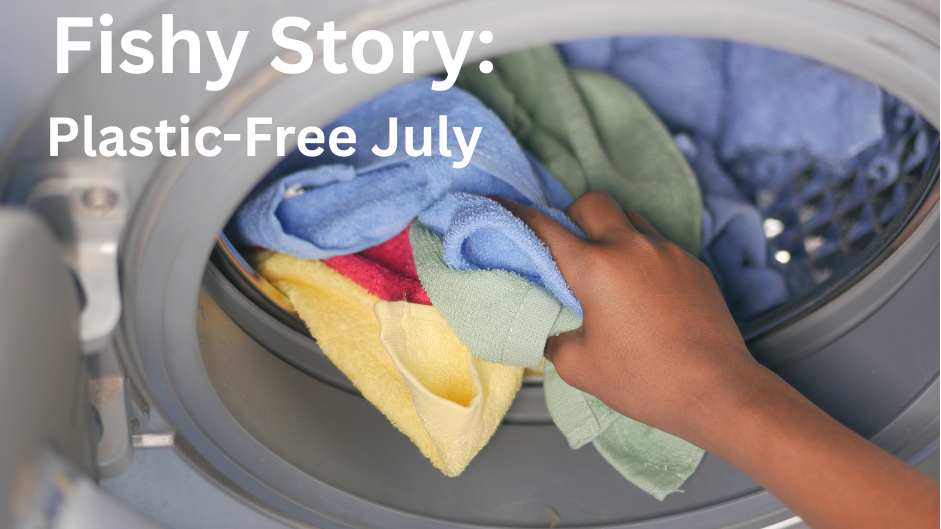
If you wear synthetics, you can use a product to capture microplastics when washing them which might otherwise pollute the oceans.
What's the problem?
Standard washing machines don't filter out all the microplastics and other microfibres which find their way into the environment, polluting the oceans as well as freshwater and the soil. This contamination risks human and wildlife health and can lead to the loss of biodiversity.
Sounds fishy
Products such as the Guppy Friend - named after a fish species - have been created to minimise the environmental impact of machine-washing synthetics. It's a large laundry bag made from a very fine mesh material which you can put synthetic - and other clothing - in when doing a wash. Afterwards, you can collect any microfibres and store them in a closed container before disposing of this as normal waste.
Egg-ocentric
As a refillable alternative to traditional laundry detergent, the Eco Egg aims to reduce plastic waste.
Have a ball
Designed to reduce the amount of fibre coming off garments in the first place, the Cora Ball is another product to help with the fight against microplastics. Like the Guppy Friend, it serves the dual function of not only protecting life in our planet's waterways but helping to protect our clothes. This extends the life of our garments, meaning we need to buy new less frequently - more 'cost per wear'.
Filter it out
There are washing machines that do filter out these tiny bad guys, and you can also have filters fitted. Wouldn't it be great if these were fitted as standard?
Au naturel
Other approaches to this particular plastic problem are wearing natural fabrics (although these may still have elements that are plastic / chemical-based), handwashing and of course simply washing clothes less frequently.
Pack it in!
Next, we look into brands' packaging and how the industry is taking steps to stop the use of single-use plastic packaging.
Receiving clothing bought online in card envelopes or boxes is one way to reduce plastic wastage. Although still only rated 'It's a Start' by the Good on You app for sustainability, Zara has now introduced recycled card for sending out its clothing parcels which are made from boxes previously used in their stores.
Other brands use recycled plastic packaging including Kettlewell, the brand I recommend to my colour analysis clients. Their distinctive parcels are made of 80% recycled low-density polyethylene and are fully recyclable at many supermarkets and recycling centres or you can return them to Kettlewell for them to recycle.
Other non-plastic innovations include compostable postage bags including cornstarch, with Pink Boutique using bags made 100% from recyclable sugar cane.
And what of Primark... considered a fast-fashion label not least because of its affordability which encourages a throw-away mentality? Currently rated higher by Good on You than Next and the same as M&S, Primark has championed the use of paper bags - made from made from recycled and recyclable materials - over plastic for many years. Recently, the company introduced a 15p charge for bags in a bid to encourage customers to bring their own bag.
Posting clothing yourself? Keep and reuse packaging you've received and look out for gummed tape. This is gummed tape, also made from paper and or water-activated adhesive, making it a more environmentally-friendly alternative to plastic tape.
For more content, sign up for my free weekly transformEd style magazine via the link below.
Take a look at my other blog posts.
Find me on my YouTube channel.


Comments